
蜗居
China and India face considerable scope for cooperation in the field of AI: Indian venture capital veteran_我的网站

一 | 波导股份:拟向激励对象44人授予限制性股票476万股 每经AI快讯,波导股份(SH600130,收盘价:4.34元)8月24日晚间发布公告称,本激励计划授予限制性股票的激励对象共计44人(占公司截至2025年底员工总数440人的10%),股票来源为公司从二级市场回购的公司A股普通股股票;拟授予的限制性股票数量476万股,占本激励计划草案公告时公司股本总额7.5亿股的0.63%;限制性股票的授予价格为每股2.14元,即满足授予条件后,激励对象可以每股2.14元的价格购买公司从二级市场回购的公司A股普通股股票,有效期自限制性股票授予登记完成之日起至激励对象获授的限制性股票全部解除限售或回购注销之日止,最长不超过36个月。 每经头条(nbdtoutiao)——金价直逼1000元/克大关,深圳水贝顾客络绎不绝,记者实探:有人一单买走1斤多黄金!白银也卖爆,有商家几天卖了几十公斤 (记者曾健辉) 免责声明:本文内容与数据仅供参考,不构成投资建议,使用前请核实。

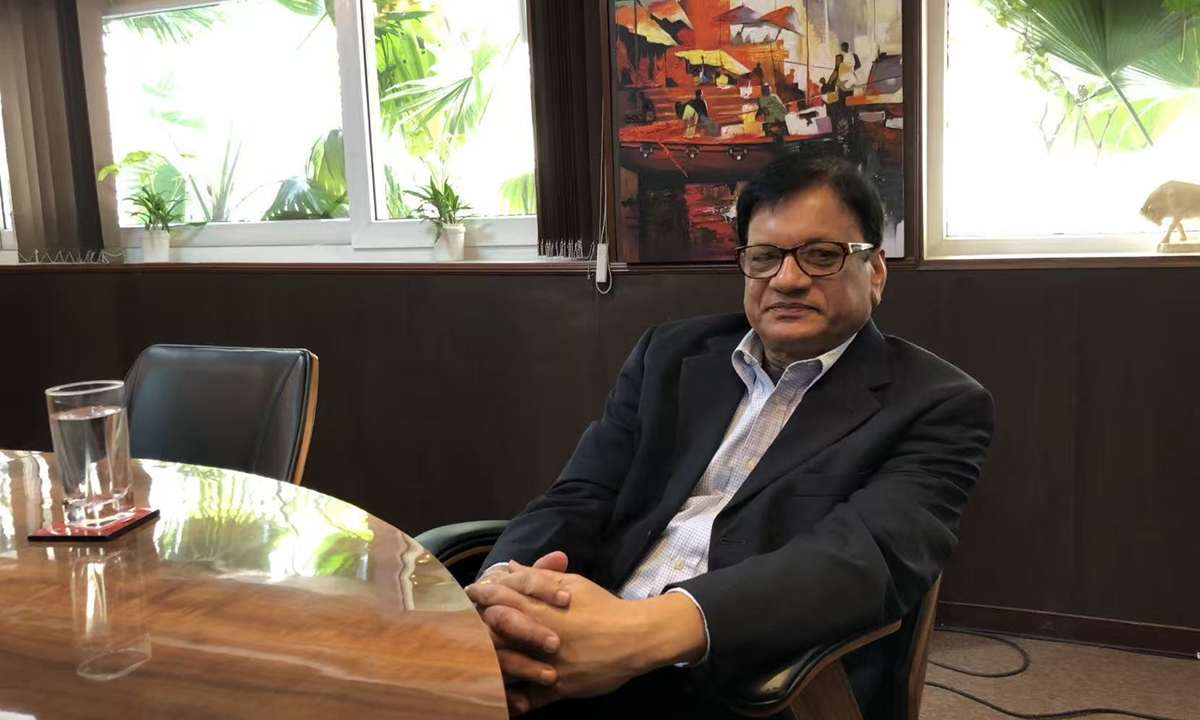
China and India have considerable scope for cooperation in the field of artificial intelligence (AI), as their AI capabilities are complementary in many respects, a senior Indian investor told the Global Times in an exclusive interview.
There is considerable scope for AI cooperation in areas that address common global challenges, including healthcare, education, agriculture, climate resilience, industrial productivity and scientific research, always within the policy frameworks established by the respective governments and international perspectives on responsible and secure AI, Mahendra Swarup, founder of VG Capital and former president of the Indian Venture and Alternate Capital Association, told the Global Times on Wednesday.
AI is likely to become one of the defining technologies of this century. India's strengths lie in software development, engineering talent, digital public infrastructure and entrepreneurial innovation. China has developed significant capabilities in AI applications, hardware, manufacturing and large-scale deployment. "These capabilities are complementary in many respects," Swarup said.
The veteran on the front line of India's venture capital investment sector made the remarks amid improving bilateral ties and a certain level of liberalization of Chinese investments in India.
Chinese investors have historically contributed to the growth of several successful Indian companies, especially start-ups. While investment activity has been moderated by regulatory developments over the past few years, there has always been underlying interest in the Indian market because of its long-term fundamentals, Swarup said.
"If the recent improvement in bilateral relations leads to greater regulatory clarity and business confidence, the Chinese investors will once again evaluate opportunities in India, although the general sentiment is one of cautious optimism," said Swarup.
Amid positive momentum in bilateral relations, Swarup noted rising opportunities for entrepreneurs from the two countries to engage in practical cooperation.
There are several areas where entrepreneurs from India and China could potentially complement each other's strengths, subject to the regulatory frameworks of different sectors in both countries, the investor said, highlighting areas including healthcare technologies, clean energy, electric mobility, advanced manufacturing, climate technologies, industrial automation, logistics and supply-chain innovation.
"In whichever sector the complementary strengths of both China and India can be brought together responsibly, they can create value not only for both countries but also for global markets," said Swarup.
India has recently shown signs of easing some long-standing restrictions on trade and investment with China, with Chinese experts saying that the move reflects the country's growing recognition of China's importance to its economic development, and a desire to create a more favorable environment for improving bilateral ties.
There has been a gradual policy adjustment, including easing restrictions on foreign direct investment (FDI) in e-commerce, allowing FDI from companies with Chinese ownership, The Hindu reported on August 1.
With India set to host a BRICS summit this year, Swarup also said that Indian and Chinese companies can work together to promote the interests of developing countries.
India and China are both major economies with significant experience in addressing the challenges of development at scale. Although each country has followed its own development path, there are areas where companies from both nations can contribute meaningfully to broader development across Asia, Africa and other emerging markets, Swarup noted.
There is considerable potential for collaboration in affordable healthcare, digital financial inclusion, renewable energy, agricultural technologies, education technology, infrastructure, supply-chain development and support for small and medium-sized enterprises. These are areas where scalable and affordable solutions can have a significant impact on improving livelihoods, the veteran said.
Partnerships that combine technology, entrepreneurship and long-term investment can help create solutions that are both commercially sustainable and socially impactful. "As two of the largest economies in the Global South, India and China have the opportunity to contribute positively to sustainable development through innovation, responsible investment and constructive commercial engagement," Swarup said.
。据此操作,风险自担。 每日经济新闻 。
Current article:http://qy7o5.fanfutaopoulaxiong.pics/list_zk2/id7mgr.html
Published on:10:28:01
相关新闻
- 国补结束了吗?国补政策2025什么时候结束已确定:国补截止时间为12月31日结束
- 从重庆银行半年报看金融活水的“流向”与“力道”
- “小推车”装着“大公益”——日照福彩“刮刮乐”户外销售车点亮城市新风景
- 我军055万吨大驱发射导弹5发5中! 舰员:炮弹按钮随时给敌人准备着
- 倒贴选秀权都没人要!湖人栽在这份“毒药合同”上,库明加交易彻底卡死
- 机器人会自己想办法干活 未来机器人足球队将踢赢人类足球
- 海外网深一度:“上合磁力”强劲,有意“入群”国家排起长队_上合组织_中国
- 高梨沙羅 五輪期間の必需品は体重計と… 上田晋也「くっせぇ時ある?」に苦笑い
- 在京东/苏宁之后,天茂大幅降低了苹果iPhone的价格。
- 投诉京和堂中医医院,穴位埋线收费高,孩子治疗无改善!
最后更新
- 爱科赛博:计提减值准备减少公司合并报表利润总额872.94万元
- 爱奇艺举办创作者大会,打出扶持“组合拳”共建多赢的创作者生态
- China's private space sector launches AI-powered satellites as commercial push gathers pace
- Patna News: एशिया पुरुष हॉकी खेल को लेकर लोगों में जोश हाई, महज दस मिनट में बुक हुए सभी मैचों के टिकट
- 汇源通信:2026年半年度净利润约-858万元
- 枪支法又要修订,联合政府打算怎么改?
- Minnesota prison put on lockdown after about 100 inmates refuse to return to their cells
- 马来西亚林吉特兑美元升至4.030,创6月初以来新高
- 山东能源古城煤矿:拉满山东能源2025年工作会议精神宣贯“氛围感”
- 风暴骤起!亚太、欧洲突传超预期加息!
热门新闻
- 名记评最糟合同:恩比德吹杨莫兰特分列前三
- 为什么超大质量黑洞如此之大?他们疯狂地吞食星星。
- 祥蛇贺元旦 文化润童心——花家地实验小学花家地校区迎新年课程实践活动
- Director Wen Muye speaks on latest anti-war movie
- “浩浩妈”王星辰全新美照!
- 建筑“搭积木”时代来临 广东稳步推行模块化建造方式,建筑“搭积木”时代来临 广东稳步推行模块化建造方式
- 【阳光•生日】时光共享 喜辰同乐——沈北新区第三幼儿园
- 89岁挪威国王病情恶化住院,前不久还接见了哈兰德领衔的挪威队
- 擘画上合发展蓝图 共促地区繁荣稳定——写在习近平主席即将出席上海合作组织成员国元首理事会第二十二次会议并对哈萨克斯坦、乌兹别克斯坦进行国事访问之际_中国_习近平
- 科尔:库里表现得令人难以置信 他在进攻端和巴特勒一起扛起球队